877.485.1973 ⎸ 541.485.1973
Info@NIFDI.org

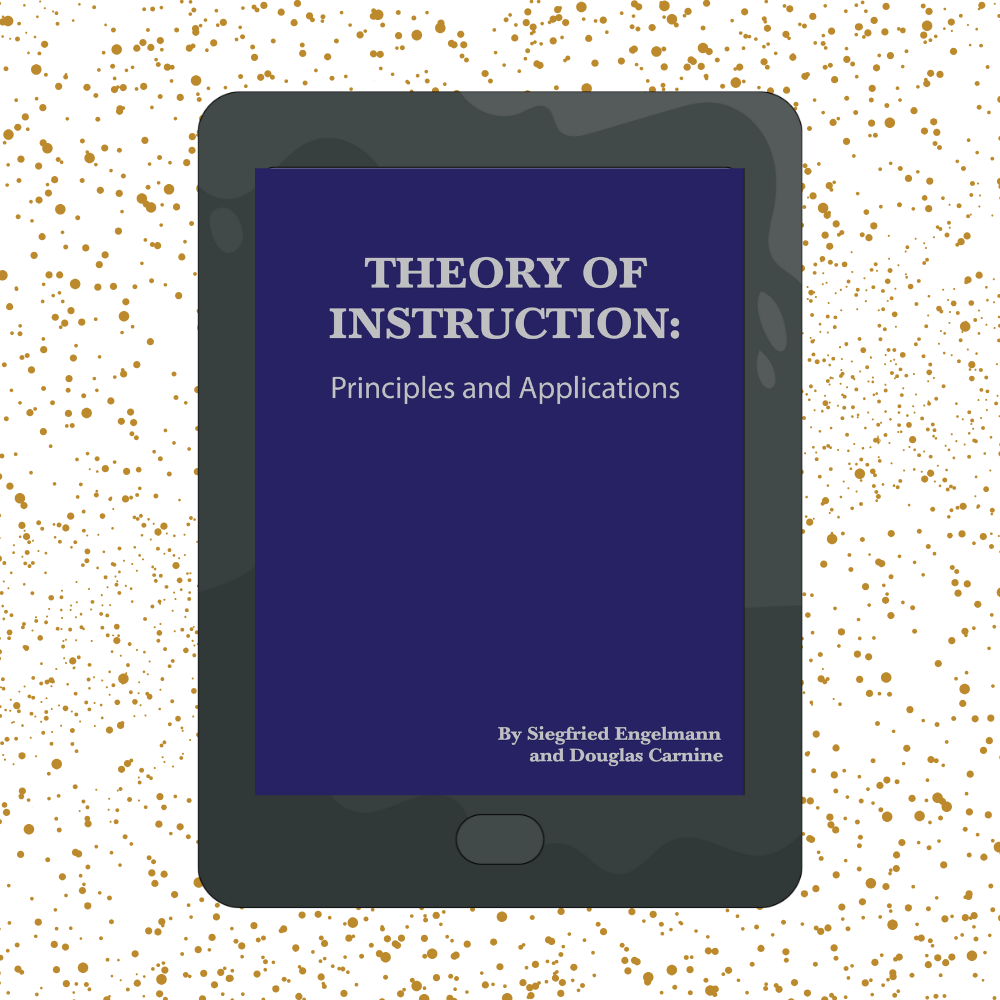
Theory of Instruction: Principles and Applications eBook

$9.99

Out of stock

Free Download:

Introduction and Chapter 1


Available exclusively on Kindle; check your local Amazon site for details.

Revised edition with updated layout, new introduction from Zig and Doug, and updated subject index.

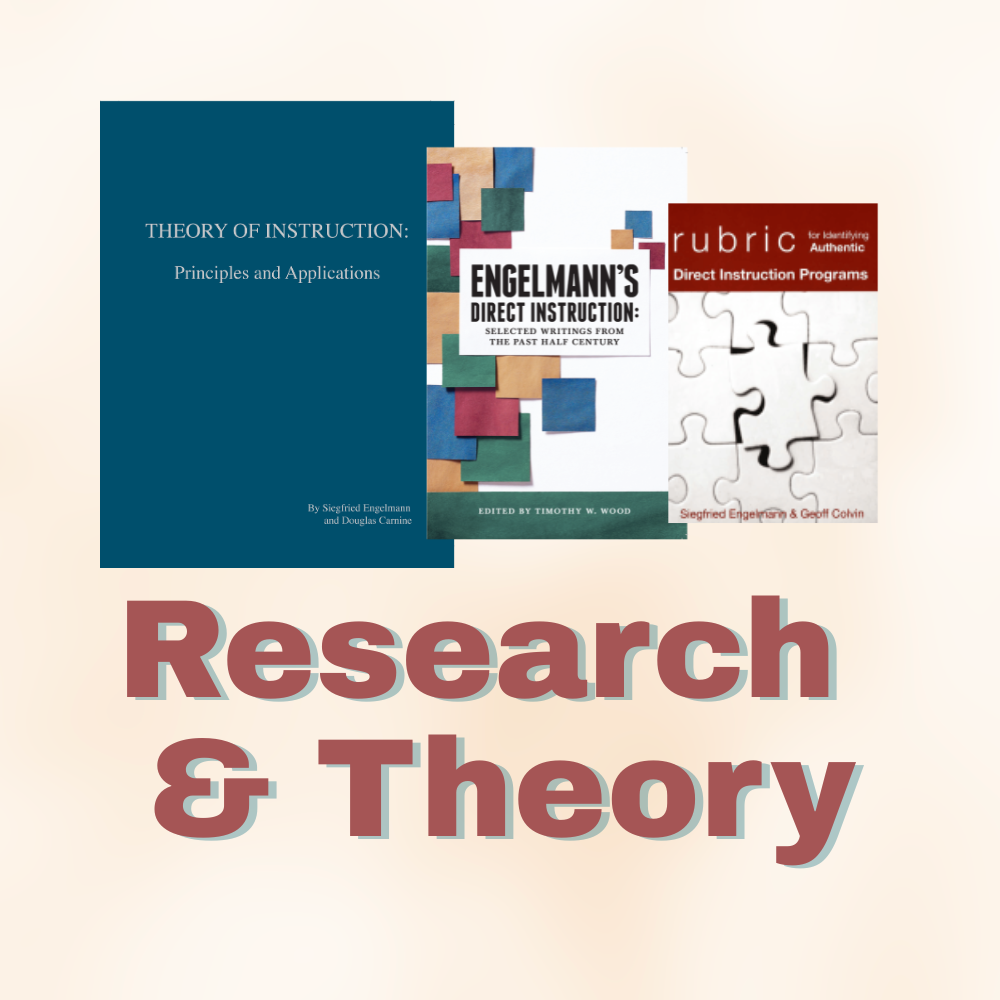
In the book Theory of Instruction: Principles and Applications, Siegfried Engelmann and co-author Douglas Carnine describe the theory underlying the development of Direct Instruction curricula.

Engelmann and Carnine not only spell out in detail the scientific and logical basis on which their theory is based, but also provide a multitude of in-depth descriptions and guidelines for applying this theory to a wide range of curricula.

This book will help the reader understand why the Direct Instruction programs authored by Engelmann and his colleagues have proven uniquely effective with students from all social and economic backgrounds, and how the guidelines based on the theory can be applied to a wide range of instructional challenges, from designing curricula for disadvantaged preschoolers to teaching algebraic concepts to older students.

Authors: Siegfried Engelmann and Douglas Carnine
Copyright: 2016
ISBN: 978-1939851307
Format: Hardback
Interested in learning how to implement Direct Instruction in your district, school, or home? NIFDI can help. Click a button below to learn more. 

What is a Peer Coach?

Peer coaches play a critical role in sustaining strong implementation of Direct Instruction (DI) at the school level. Selected during the first year of implementation, peer coaches are classroom teachers who demonstrate strong instructional practice, effective communication with colleagues, and a willingness to support others. Because they teach the same programs as their peers, they bring practical expertise and shared experience that help build trust and collaboration across the school.

As implementation progresses, peer coaches extend the impact of NIFDI consultants by providing ongoing, school-based support when consultants are not on-site. Their coaching is non-evaluative and focused on improving student outcomes. Peer coaches reinforce effective teaching practices and guide colleagues to make targeted adjustments that directly impact student performance and behavior.

Peer coaches participate in a structured, multi-year training sequence through NIFDI. Over the course of two to three years, they are trained to analyze student performance data, conduct both brief and extended classroom observations, and support data-driven problem solving. Advanced training prepares them to lead grade-level meetings and contribute to broader instructional planning with school leadership.

By developing peer coaches, schools build internal capacity to maintain and strengthen DI implementation over time—ensuring continuity, supporting new staff, and driving sustained student achievement.