
877.485.1973 ⎸ 541.485.1973
Info@NIFDI.org

Funnix Reading

Funnix Reading

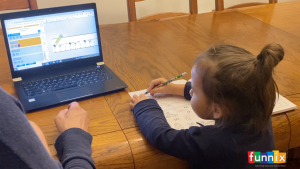
Funnix is a small-step, carefully sequenced web-based reading program designed to teach your child to read—and to enjoy reading—as efficiently as possible. Funnix teaches all the skills necessary for children to become successful readers: decoding, fluency, vocabulary, and comprehension.

Upon completing the 220 Funnix lessons, children will have command of a vocabulary of about 2000 words, including multisyllabic and irregular words. Children who master Funnix also have the skills to decode thousands of words that aren’t introduced in the program.

Funnix can be used by parents, teachers, paraprofessionals, student mentors, and adult volunteers. Funnix requires only that a literate person sit with the child during each lesson and provide positive feedback. This person controls the mouse, ensures the child responds to the tasks presented by the built-in narrator, and decides whether to repeat tasks, review exercises, or continue in the program.

Students in the Direct Instruction program Horizons may easily be transitioned into the appropriate level of Funnix. 

Program Resources

Access placement tests and related documents.

Where to Purchase

Visit the publisher’s website for purchasing information.

Related Research

Learn more about the research behind this program.

Interested in learning how to implement Direct Instruction in your district, school, or home? NIFDI can help. Click a button below to learn more. 

What is a Peer Coach?

Peer coaches play a critical role in sustaining strong implementation of Direct Instruction (DI) at the school level. Selected during the first year of implementation, peer coaches are classroom teachers who demonstrate strong instructional practice, effective communication with colleagues, and a willingness to support others. Because they teach the same programs as their peers, they bring practical expertise and shared experience that help build trust and collaboration across the school.

As implementation progresses, peer coaches extend the impact of NIFDI consultants by providing ongoing, school-based support when consultants are not on-site. Their coaching is non-evaluative and focused on improving student outcomes. Peer coaches reinforce effective teaching practices and guide colleagues to make targeted adjustments that directly impact student performance and behavior.

Peer coaches participate in a structured, multi-year training sequence through NIFDI. Over the course of two to three years, they are trained to analyze student performance data, conduct both brief and extended classroom observations, and support data-driven problem solving. Advanced training prepares them to lead grade-level meetings and contribute to broader instructional planning with school leadership.

By developing peer coaches, schools build internal capacity to maintain and strengthen DI implementation over time—ensuring continuity, supporting new staff, and driving sustained student achievement.