877.485.1973 ⎸ 541.485.1973
Info@NIFDI.org

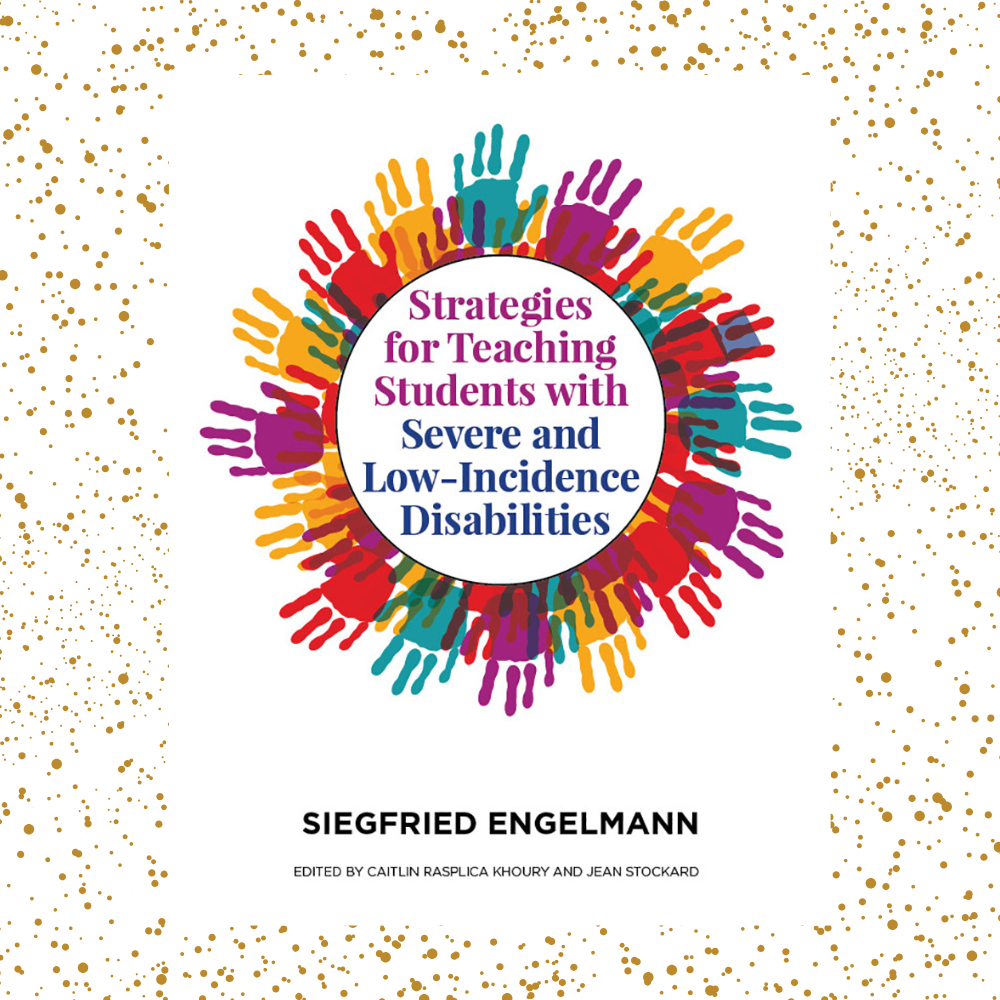
Strategies for Teaching Students with Severe and Low-Incidence Disabilities

$29.95

31 in stock

Siegfried Engelmann’s Direct Instruction (DI) programs have demonstrated, time and time again, that all children can learn when taught effectively. In Strategies for Teaching Students with Severe and Low-Incidence Disabilities, Engelmann focuses on working with individuals who may require additional instruction in language-based and motor skills, as well as in the management of disruptive behavior, prior to being taught in a general education setting. Engelmann starts by describing the theory that underlies the development of individual programs for students with severe and low-incidence disabilities. He provides guidance to teachers, caregivers, and therapists on developing programs that address the individual needs of their students. The book acknowledges that some students will progress faster than others and therefore provides explicit guidance to help teachers decide where to begin their work. Strategies for Teaching Students with Severe and Low-Incidence Disabilities can be used as a general tool and guide for teachers working with a variety of populations, as well as a reliable reference for teachers, caregivers, and therapists to turn to when faced with a new situation.

Paperback versions are now available in countries outside the U.S. through Amazon’s print-on-demand service. Check your local Amazon site for details.

Author: Siegfried Engelmann
Copyright: 2018
ISBN: 978-1-939851-26-0
Format: Coil Binding
Interested in learning how to implement Direct Instruction in your district, school, or home? NIFDI can help. Click a button below to learn more. 

What is a Peer Coach?

Peer coaches play a critical role in sustaining strong implementation of Direct Instruction (DI) at the school level. Selected during the first year of implementation, peer coaches are classroom teachers who demonstrate strong instructional practice, effective communication with colleagues, and a willingness to support others. Because they teach the same programs as their peers, they bring practical expertise and shared experience that help build trust and collaboration across the school.

As implementation progresses, peer coaches extend the impact of NIFDI consultants by providing ongoing, school-based support when consultants are not on-site. Their coaching is non-evaluative and focused on improving student outcomes. Peer coaches reinforce effective teaching practices and guide colleagues to make targeted adjustments that directly impact student performance and behavior.

Peer coaches participate in a structured, multi-year training sequence through NIFDI. Over the course of two to three years, they are trained to analyze student performance data, conduct both brief and extended classroom observations, and support data-driven problem solving. Advanced training prepares them to lead grade-level meetings and contribute to broader instructional planning with school leadership.

By developing peer coaches, schools build internal capacity to maintain and strengthen DI implementation over time—ensuring continuity, supporting new staff, and driving sustained student achievement.