Free Download:
Forward and Introduction
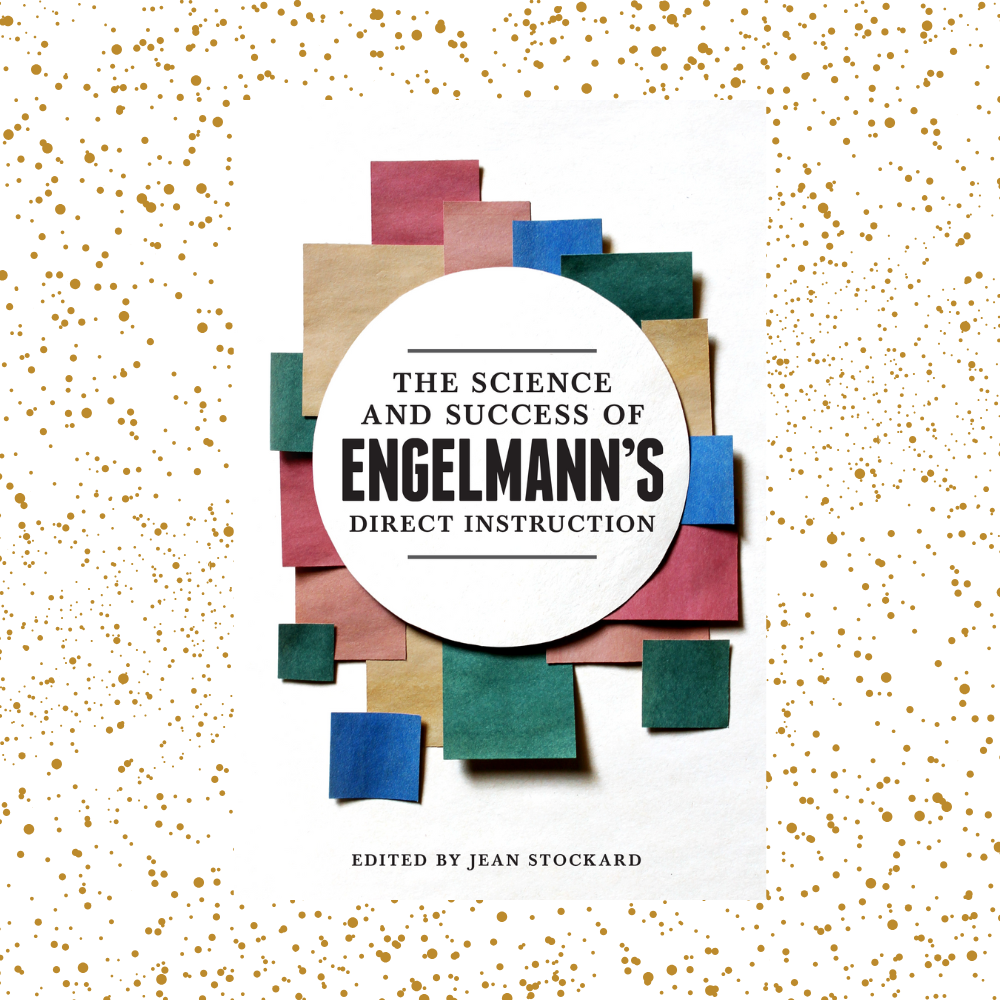
For almost a half-century, Siegfried Engelmann has shown that all children can learn when taught effectively. The Direct Instruction (DI) curricular programs he developed reflect the most stringent requirements of the scientific world. They build on sound theoretical understandings of how effective instruction and learning occur, involve painstaking attention to each detailed step of the instructional process, and have been validated through rigorous tests of their efficacy. Engelmann’s work has transformed the instructional experience of thousands of students and has also led to noted improvements in school behavioral climates and instructional practices. This book is a tribute to the legacy and genius of Siegfried Engelmann and his decades of work in developing the Direct Instruction curricular programs.
The authors of the chapters in this book represent several generations and multiple disciplines, bringing a variety of perspectives to their analyses of Engelmann’s career and impact. Part I of the book documents the extensive research embodied in the development of DI programs, the research that confirms their effectiveness, the unfavorable and short-sighted reactions of the education establishment to the work, and Engelmann’s resilience and strength in continuing to develop programs, write essays and books, and promote learning and effective instruction for all students. Part II examines the legacy of his work, including the guidance it provides for transforming schools into effective learning centers for all children and the ways it has influenced the tradition of behavioral management in schools. The book ends with a look at the future, the potential for wider acceptance of Engelmann’s developments, and the hope for truly solving the problems of achievement in America’s schools. This long-awaited survey of DI’s history and impact belongs in the collection of all educational researchers, teachers, college libraries, and interested administrators.
Jean Stockard is professor emerita at the University of Oregon and the former director of research and evaluation for the National Institute for Direct Instruction. She is the author of numerous books in education and sociology, including Effective Educational Environments and Sociology: Discovering Society.
Paperback versions are now available in countries outside the U.S. through Amazon’s print-on-demand service. Check your local Amazon site for details.
Editor: Jean Stockard
Copyright: 2014
ISBN: 978-1-939851-00-0
Format: Paperback