877.485.1973 ⎸ 541.485.1973
Info@NIFDI.org

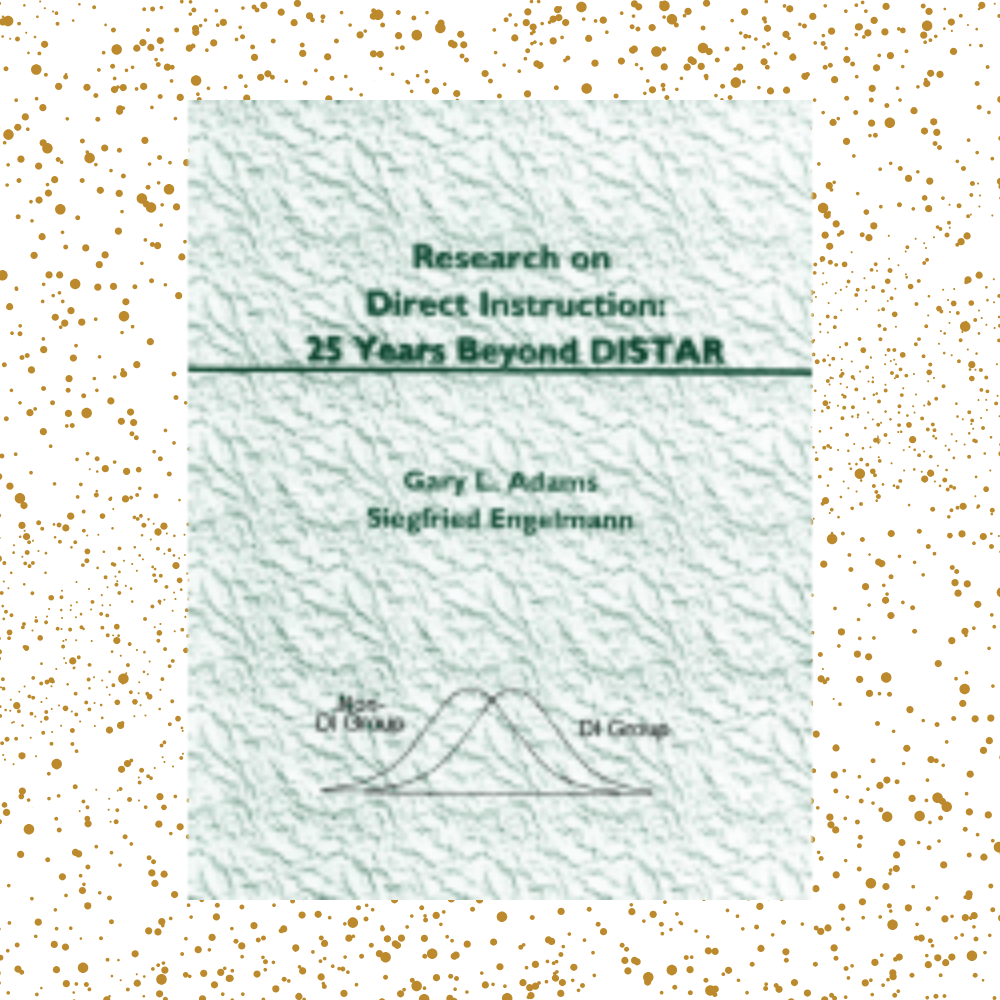
Research on Direct Instruction: 25 Years Beyond DISTAR

$29.95

30 in stock

Free Download:

Introduction


This book presents a description of Direct Instruction and a meta-analysis of research on Direct Instruction. The term “Direct Instruction” refers to instructional programs developed by Siegfried Engelmann and his colleagues, including DISTAR (Direct Instruction System for Teaching Arithmetic and Reading) and DISTAR Language (Direct Instruction System for Teaching and Remediation).

Chapters in the book include:

  1. Teaching: The Roots of Direct Instruction Features of DI
  2. Instructional Programs
  3. Myths about Direct Instruction
  4. Background for the DI Meta-Analysis
  5. Results of the DI Meta-Analysis
  6. Project Follow Through
  7. Additional Documentation

Appendices contain a list of Direct Instruction Programs and a list of Direct Instruction articles by category.

Authors: Gary L. Adams and Siegfried Engelmann
Copyright: 1996
ISBN: 0675210143
Format: Paperback
Interested in learning how to implement Direct Instruction in your district, school, or home? NIFDI can help. Click a button below to learn more. 

What is a Peer Coach?

Peer coaches play a critical role in sustaining strong implementation of Direct Instruction (DI) at the school level. Selected during the first year of implementation, peer coaches are classroom teachers who demonstrate strong instructional practice, effective communication with colleagues, and a willingness to support others. Because they teach the same programs as their peers, they bring practical expertise and shared experience that help build trust and collaboration across the school.

As implementation progresses, peer coaches extend the impact of NIFDI consultants by providing ongoing, school-based support when consultants are not on-site. Their coaching is non-evaluative and focused on improving student outcomes. Peer coaches reinforce effective teaching practices and guide colleagues to make targeted adjustments that directly impact student performance and behavior.

Peer coaches participate in a structured, multi-year training sequence through NIFDI. Over the course of two to three years, they are trained to analyze student performance data, conduct both brief and extended classroom observations, and support data-driven problem solving. Advanced training prepares them to lead grade-level meetings and contribute to broader instructional planning with school leadership.

By developing peer coaches, schools build internal capacity to maintain and strengthen DI implementation over time—ensuring continuity, supporting new staff, and driving sustained student achievement.