877.485.1973 ⎸ 541.485.1973
Info@NIFDI.org

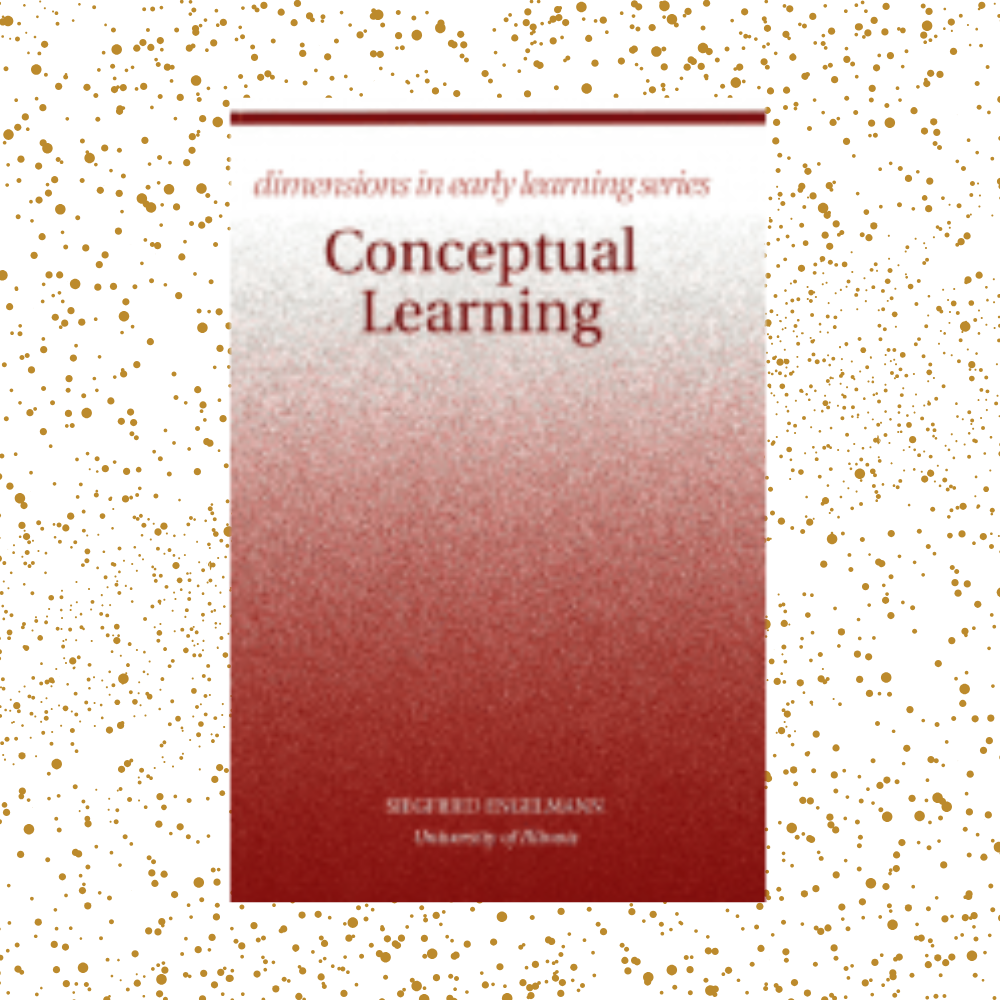
Conceptual Learning

$9.95

30 in stock

Siegfried Engelmann knows how to teach things to children and believes that doing so is a most urgent and important undertaking. Engelmann knows, as does every parent, that there are many times in children’s lives when the things they need to learn should be taught directly and efficiently. Children might eventually discover, incidentally, the rules for crossing streets safely. But we realize that this matter is too critical to be left to children’s own learning style and time.

It might come too late or, perhaps, never. Engelmann believes that learning to think, reason, solve problems, and use language effectively is also highly urgent, and that it is the business of teachers to efficiently and effectively shape the environment so that children are taught these skills.

This monograph is Engelmann’s answer to the question of how a master teacher derives effective teaching procedures. The monograph is not easy reading, nor could it be. This book is an effort to simplify and highlight some of the main steps involved in a teacher’s determination of how to teach.

The monograph is organized into three parts. Chapters I–V describe the derivation of concept-teaching procedures; Chapter VI presents the teaching of problem-solving as an extension of the basic concept-teaching procedures presented in the first section; Chapter VII describes the systematic teaching of persistence, positive self-image, acceptable classroom behavior, and a liking for school learning.

Author: Siegfried Engelmann
Copyright: 1969; Reprinted 2010
ASIN: B0006C733Y
Format: Paperback

Note: This book is Volume 11 of the Dimensions in Early Learning Series.
Interested in learning how to implement Direct Instruction in your district, school, or home? NIFDI can help. Click a button below to learn more. 

What is a Peer Coach?

Peer coaches play a critical role in sustaining strong implementation of Direct Instruction (DI) at the school level. Selected during the first year of implementation, peer coaches are classroom teachers who demonstrate strong instructional practice, effective communication with colleagues, and a willingness to support others. Because they teach the same programs as their peers, they bring practical expertise and shared experience that help build trust and collaboration across the school.

As implementation progresses, peer coaches extend the impact of NIFDI consultants by providing ongoing, school-based support when consultants are not on-site. Their coaching is non-evaluative and focused on improving student outcomes. Peer coaches reinforce effective teaching practices and guide colleagues to make targeted adjustments that directly impact student performance and behavior.

Peer coaches participate in a structured, multi-year training sequence through NIFDI. Over the course of two to three years, they are trained to analyze student performance data, conduct both brief and extended classroom observations, and support data-driven problem solving. Advanced training prepares them to lead grade-level meetings and contribute to broader instructional planning with school leadership.

By developing peer coaches, schools build internal capacity to maintain and strengthen DI implementation over time—ensuring continuity, supporting new staff, and driving sustained student achievement.